|
|
(UCSB Hist 2c), by Professor Harold Marcuse contact: marcuse@history.ucsb.edu page created March. 28, 2003; last update: May 7, 2003 |
|
|
(UCSB Hist 2c), by Professor Harold Marcuse contact: marcuse@history.ucsb.edu page created March. 28, 2003; last update: May 7, 2003 |
 Course
materials (back to top)
Course
materials (back to top) 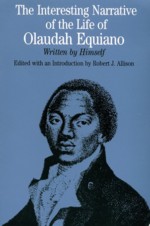 Excellent
site with an illustrated
biography of Vassa/Equiano, and excerpts from his book, also a
bibliography,
map and
links.
The site was created by Dr
Brycchan Carey at the School of Humanities, Kingston University,
UK. Carey's 1996 MA thesis was on "The Poetry of Anti-Slavery;
1787-94," and his 2000 doctoral thesis was titled The Rhetoric
of Sensibility: Argument, Sentiment, and Slavery in the Late Eighteenth
Century.
Excellent
site with an illustrated
biography of Vassa/Equiano, and excerpts from his book, also a
bibliography,
map and
links.
The site was created by Dr
Brycchan Carey at the School of Humanities, Kingston University,
UK. Carey's 1996 MA thesis was on "The Poetry of Anti-Slavery;
1787-94," and his 2000 doctoral thesis was titled The Rhetoric
of Sensibility: Argument, Sentiment, and Slavery in the Late Eighteenth
Century.This lecture course with discussion sections is designed for undergraduates of all disciplines (natural and social sciences, fine arts, humanities) with no prior college-level coursework in history. It fulfills the General Education requirement in area E-1, Civilization and Thought, and is approved as a GE writing course. (UCSB catalog info on GE)
The UCSB General Catalog description for Hist 2A,B,C reads as follows: "Survey of the peoples, cultures, and social, economic, and political systems that have characterized the world's major civilizations in Europe, Asia, Africa, the Americas, and Oceania." Hist 2C covers the period 1700CE-present.
Of course, it is utterly impossible to cover this much temporal and spatial ground in a meaningful way during a 10-week quarter, and I don't even try to do that. In fact, I don't think of history as a lot of information that "everyone should know." For me, it is a wealth of experiences, some of which are interesting and entertaining (like good books or movies), and some of which help me to understand and evaluate what is going on in the world around me. In this course we will study some of the historical experiences I have found to be interesting and helpful in understanding the present (we won't pass judgment on the entertainment value). Some of those experiences are the lives of exceptional people, some of ordinary people. Some are great cataclysmic events such as revolutions or wars. And some are ideas (or systems of beliefs) that have helped people to see the world around them in new ways, and have led to monumental changes in the way they--and we--live. Along the way of learning about these experiences, we will also learn and practice some skills, such as how to understand and draw meaning from primary sources, how to think beyond the obvious level of a story to its deeper meanings, and how to express our thoughts clearly in discussion and in writing.
By reading the assignments, attending the lectures, participating in section discussion and doing the written work, you should:
- gain a better understanding of the nature and relevance of historical study in general;
- better appreciate the historical forces and events that have shaped the modern world (since ca. 1700);
- better appreciate the diversity of modern nations and peoples and the ways they act on each other in time and space;
- improve your ability to understand and interpret (draw reasoned conclusions about) historical source materials (including texts, images and music);
- improve your ability to write a short paper with research, analysis, interpretation and argumentation.
 Grading
issues (back to top)
Grading
issues (back to top)Please note that we grade YOUR WORK, not you.
If you feel that the grade you received on an assignment, exam or paper does not correspond to the quality of work that you submitted, you must first meet with your TA.
No grading reassessments will be done before 24 hours have elapsed since the work was returned, nor after two weeks after the work was returned.
If you are within that window of time, you can:
- EITHER: Print out, complete, and submit this Universal Grade Change Application Form.;-)
- OR: Write a page (or paragraph, whatever it takes) explaining WHY you think your work is better than the grade assigned to it. Please refer to the appropriate assignment sheet, and make sure you fulfilled the formal requirements of the assignment.
- Then resubmit the work in question with your explanation to the TA.
- If you are not satisfied with that reevaluation, please ask your TA to date and sign your explanation sheet, and then submit it and ALL of your work for this course to me (I need everything so that I will have the comparable knowledge of your work as your TA). I will assess your work for the course and the assignment in question, and get back to you.
- Note that I may lower your grade as well as raise it.
- Finally, be sure to put some contact address on your explanation sheet, so that I can be in touch with you.
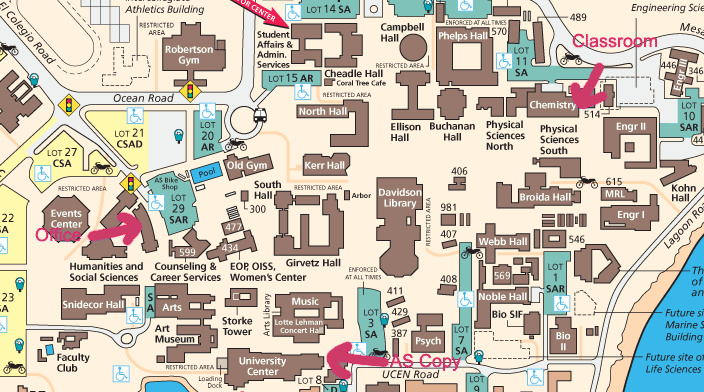 3/31:
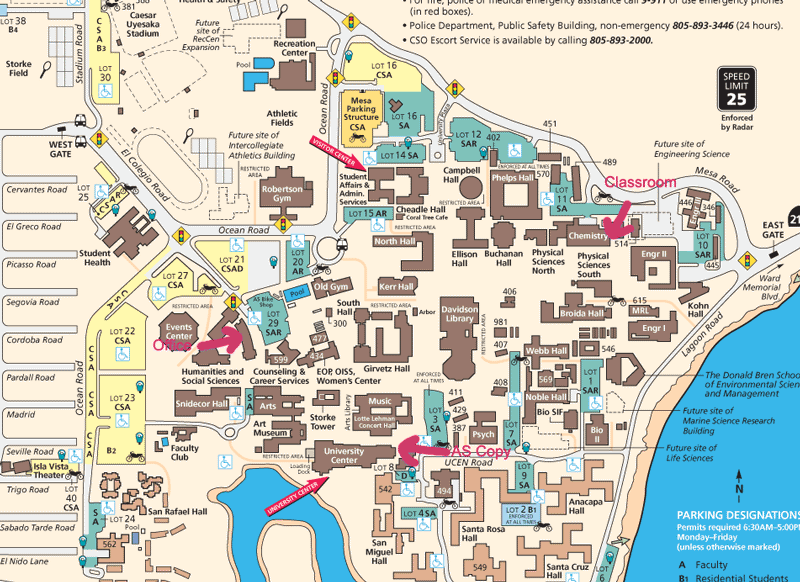
class meets in Chem 1171 (map)
3/31:
class meets in Chem 1171 (map)|
visitors since March 31, 2003 (April 1, 2003=1st class) |
37 on 4/2, noon |
778 on 5/2, 1pm 820 on 5/4, 1pm 930 on 5/7, 11pm |